
Riccardo Bertoncelli Reflects on Past Feud with Francesco Guccini: MSMN News
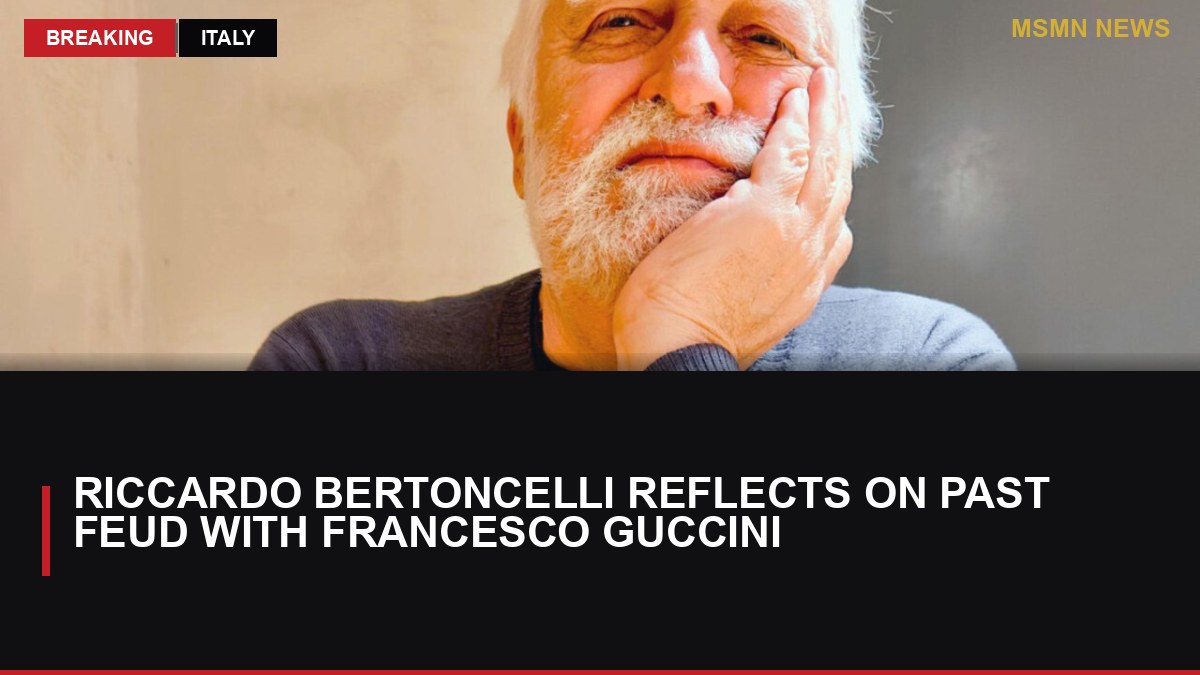
Riccardo Bertoncelli revisits his famed dispute with Francesco Guccini, offering insights into the evolving dynamics between critics and artists.
In the ever-evolving world of music criticism, few feuds have captured the public's imagination quite like the one between Riccardo Bertoncelli and Francesco Guccini. This storied conflict, which dates back several decades, is once again in the spotlight as Bertoncelli offers a candid reflection on the events that led to their public falling out. In a recent interview, Bertoncelli, a prominent figure in Italian music journalism, expressed a sense of nostalgia and regret over the review that sparked a legendary rift with the beloved Italian singer-songwriter.
Riccardo Bertoncelli, who has spent much of his career critiquing and chronicling the Italian Music scene, found himself at the center of a storm in the mid-1970s. It was a time when the cultural landscape of Italy was undergoing significant transformation, and music was an essential part of that change. Bertoncelli, known for his incisive and often provocative reviews, penned a critique of Guccini's work that did not sit well with the artist. The review, which Bertoncelli now admits he would not write in the same way today, was perceived as harsh and dismissive, leading to a public exchange that became the stuff of legend.
Francesco Guccini, known for his poetic lyrics and deep, resonant voice, was at the peak of his career when Bertoncelli's review was published. Guccini's music, which often addressed social and political themes, had earned him a passionate following. His response to Bertoncelli's critique was swift and cutting, encapsulated in his song "L'Avvelenata," a scathing retort that has since become iconic in its own right. The song's lyrics, dripping with sarcasm and disdain, were a direct response to Bertoncelli's words, marking a high point in their public dispute.
Reflecting on the incident, Bertoncelli acknowledges that his approach to criticism has evolved over the years. He admits that the review, which he once stood by with conviction, might not have been the fairest assessment of Guccini's artistry. "We cared for each other," Bertoncelli remarked, suggesting that despite their differences, there was a mutual respect that perhaps got lost in the heat of the moment. This newfound perspective offers a poignant reminder of the complexities inherent in the relationship between artists and critics.
The feud between Bertoncelli and Guccini is more than just a footnote in Italian music history; it is a reflection of a broader conversation about the role of criticism in the arts. Critics like Bertoncelli are tasked with offering honest evaluations, but the line between constructive criticism and personal attack can often blur, especially when passions run high. For Guccini, whose work was deeply personal and reflective of his own experiences, the review felt like a personal affront.
As Bertoncelli looks back, he does so with a sense of humility and understanding. The passage of time has provided him with the clarity to see the impact of his words not just on Guccini, but on the broader cultural discourse. It raises questions about how critics can balance their duty to provide candid assessments with the need to respect the artists' intentions and contributions.
The reconciliation of sorts between Bertoncelli and Guccini, even if only in spirit, serves as a reminder of the power of dialogue and reflection. It underscores the idea that while words can wound, they can also heal when approached with sincerity and empathy. For Bertoncelli, revisiting this chapter of his career is not just about setting the record straight but also about acknowledging the growth that comes with time and experience.
The Italian music scene in the 1970s was a vibrant tapestry of traditional sounds interwoven with new influences from around the world. The country was experiencing a cultural renaissance, with artists like Guccini leading the charge in exploring themes of social justice, political change, and personal introspection. This era of music was not just entertainment; it was a catalyst for discussion and reflection, making the role of critics like Bertoncelli even more crucial.
Bertoncelli's initial review of Guccini's work was set against this backdrop of cultural upheaval. His words, intended as a critique, inadvertently became a catalyst for one of the most memorable exchanges in Italian music history. The critique questioned the depth and authenticity of Guccini's work, a move that many of Guccini's fans saw as a direct challenge to the integrity of an artist who had given voice to their own struggles and aspirations.
The song "L'Avvelenata," which translates to "The Poisoned," was Guccini's lyrical riposte, a raw and unfiltered response that laid bare his frustrations with the world of criticism. The song's biting lyrics painted a vivid picture of an artist at odds with the very people who were supposed to understand and appreciate his craft. It was a bold statement that resonated with many and solidified Guccini's place as a voice for the disenchanted.
Over the years, both Bertoncelli and Guccini have continued to contribute to the cultural landscape of Italy, each in their own unique way. Bertoncelli's reflections on the feud offer a window into the evolving nature of Music Criticism itself. As he notes, the role of a critic is not static; it changes with the times, shaped by the cultural, social, and political contexts in which it operates.
For Bertoncelli, this reflection is not just about revisiting the past but also about looking forward. He acknowledges that the lessons learned from his interactions with Guccini have informed his approach to criticism in the years since. It is a reminder that while the pen can be mightier than the sword, it must be wielded with care and consideration.
As the Italian music scene continues to evolve, the lessons from this infamous feud remain relevant. New generations of critics and artists can learn from the past, understanding that while criticism is an integral part of artistic development, it is most effective when delivered with an understanding of its potential impact. Bertoncelli's reflections offer a blueprint for how critics can navigate the delicate balance between honesty and empathy.
In the end, the story of Bertoncelli and Guccini is one of reconciliation and growth. It highlights the enduring power of music and words to connect, divide, and ultimately bring people together. As both men continue to contribute to the cultural fabric of Italy, their story serves as a testament to the dynamic interplay between artist and critic, a relationship as complex and nuanced as the music itself.
The broader implications of this feud extend beyond the individuals involved. They touch on the very nature of art and its interpretation. In a world where the lines between personal expression and public perception are increasingly blurred, the dialogue between artists and critics remains as vital as ever. Bertoncelli's journey from a critic who once stood by his harsh words to one who now reflects with empathy and understanding is a testament to the power of growth and dialogue.
News briefing / Source
- ANSA Italy




Comments