
New Zealand Politician Joins Meeting from Bathroom: MSMN News
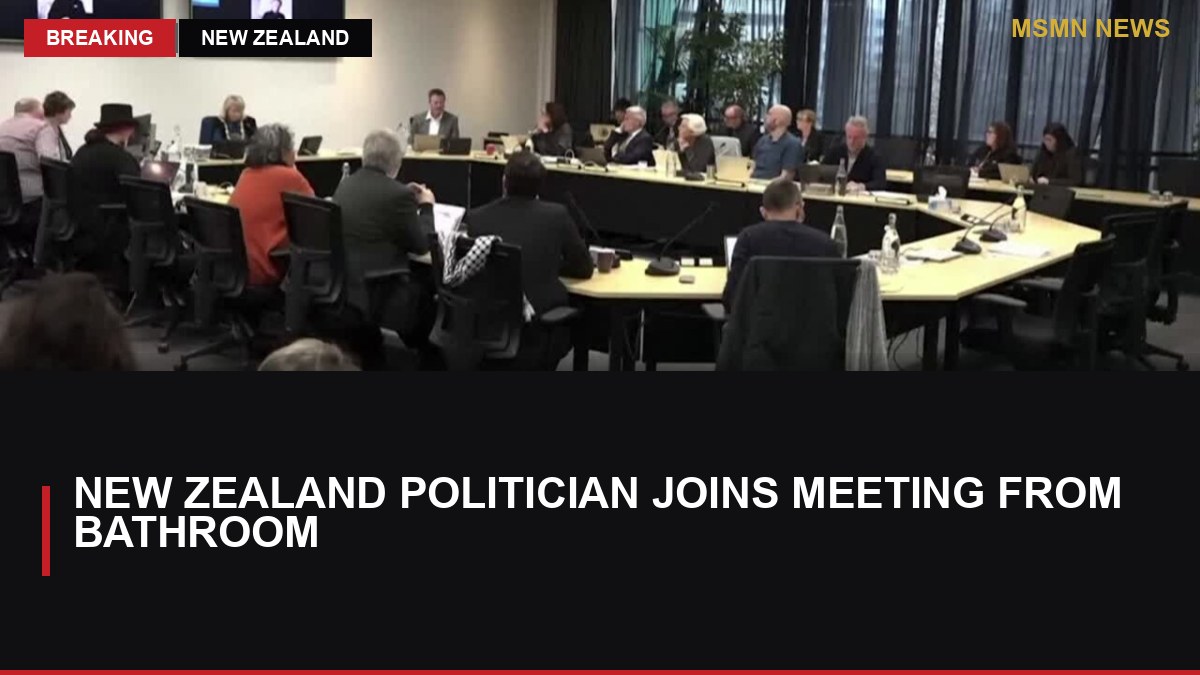
A New Zealand politician's unconventional participation in a virtual meeting from her bathroom has sparked a discussion about the evolving nature of political engagement in the digital age.
In an unusual turn of events, a New Zealand politician recently participated in a virtual meeting from her bathroom, making headlines and raising eyebrows. The event has drawn attention not only for its unconventional setting but also for the politician's candid remarks during the session. The incident shines a light on the evolving nature of political engagement in the age of remote meetings and virtual platforms.
The Incident
During a scheduled video call, the politician, whose identity has not been disclosed in this report, appeared from her bathroom, surrounded by laundry. As she greeted her fellow participants, she made a lighthearted comment: "The important thing is that you see me; you can also see my laundry." This statement encapsulated her casual demeanor and willingness to break the mold of traditional political decorum.
The meeting was part of a series aimed at discussing local issues affecting constituents. While the setting was unexpected, the politician's message remained focused on the topics at hand. Her participation from such an intimate space has sparked a variety of reactions, from amusement to criticism, highlighting the blurred lines between personal and professional life in the current political climate.
Context of Virtual Meetings
The rise of virtual meetings has transformed how politicians interact with their constituents and colleagues. Since the onset of the COVID-19 pandemic, many officials have adapted to conducting meetings from home, utilizing platforms like Zoom and Microsoft Teams. This shift has made political discussions more accessible, allowing for broader participation from the public.
However, it has also raised questions about professionalism and decorum in political settings. Attending a meeting from a bathroom, as this politician did, might be seen as crossing a line by some. Critics argue that such casualness undermines the seriousness of political discourse, while supporters contend that it humanizes politicians, making them more relatable.
Public Reaction
The public's response to the incident has been mixed. Social Media platforms lit up with reactions ranging from humor to disbelief. Memes and jokes quickly circulated, with some users praising the politician for her authenticity and others suggesting that the setting was inappropriate for a political meeting.
One Twitter user commented, "This is what we need in Politics—realness! Who cares if she’s in her bathroom? At least she’s showing up!" Meanwhile, another user expressed concern, stating, "This isn’t how we should be representing ourselves in politics. There should be a standard."
The diverse reactions reflect broader societal attitudes towards political figures and their public personas. As the lines between personal and professional spaces continue to blur, incidents like these may become more common in the political arena.
The Evolving Nature of Political Engagement
This incident is not isolated. It represents a shift in how politicians engage with the public. The pandemic has accelerated the adoption of technology in politics, leading to more informal interactions. Politicians have begun to leverage social media and video conferencing to connect with constituents in ways that were previously unimaginable.
For instance, many politicians now host live Q&A sessions on social media platforms, allowing for direct interaction with the public. These platforms enable a more personal touch, often leading to a more engaged electorate. However, this informality can also lead to missteps, as seen in this case.
In addition to social media, the use of video conferencing has allowed politicians to reach out to constituents in a more direct manner. Town hall meetings that once required physical presence have transitioned to online formats, enabling individuals who might not have been able to attend in person to participate. This democratization of political discourse has the potential to empower more voices in the conversation, but it also raises questions about the appropriateness of certain behaviors in these virtual settings.
Implications for Future Political Engagement
As political leaders navigate this new landscape, they must consider the implications of their actions. The incident from the bathroom could serve as a learning opportunity for politicians on how to balance authenticity with professionalism. It raises questions about the expectations society has for its leaders and how these expectations are changing in a digital age.
Moving forward, politicians may need to establish guidelines for virtual meetings to maintain a level of professionalism while still being relatable. Finding a balance between these two aspects could be crucial for effective political engagement in the future.
Moreover, as the boundaries between personal and professional lives continue to blur, politicians may need to develop a clearer understanding of how their environments influence public perception. The challenge lies in maintaining a sense of authenticity while also adhering to the expectations of professionalism that come with public office.
Conclusion
The New Zealand politician's bathroom meeting has opened up a dialogue about the nature of political representation and the evolving expectations of public figures. As society continues to adapt to digital communication, incidents like this may become more common. While the setting may have been unconventional, the underlying message about accessibility and engagement remains significant. The incident serves as a reminder that politics is not just about formal meetings and stiff suits; it is also about connecting with people on a human level.
As the political landscape evolves, so too will the ways in which politicians communicate and engage with their constituents. Whether this incident is seen as a humorous anecdote or a serious misstep, it undoubtedly reflects the changing dynamics of political discourse in the modern world. The reactions to this incident may also influence how future political figures approach their public engagements, with many likely to reconsider the environments from which they choose to participate in discussions.
As we continue to monitor how political engagement evolves in this digital age, it will be interesting to see whether more politicians adopt a similarly casual approach or if there will be a pushback towards more traditional forms of decorum in political settings. This incident, while seemingly trivial, may indeed signal a significant shift in how we perceive and interact with our political leaders.
News briefing / Source
Reporting by MSMN News, based on publicly available source material.
Source: ANSA Italy






Comments